Work Packages
Eight precisely organized work packages driving efficiency and innovation across every aspect of INNOECOFOOD.
Precisely Organized, Precisely Executed
Click any work package to expand full task details.
Project Management
Coordination, monitoring, and governance of the INNOECOFOOD project
WP1 covers the full operational and financial management of INNOECOFOOD, ensuring all work packages are coordinated effectively, targets are met, and ethical, environmental, and gender considerations are addressed throughout the project lifecycle.
Establishing Four ECOHUBs
Scoping, installation, pond construction, and processing room setup
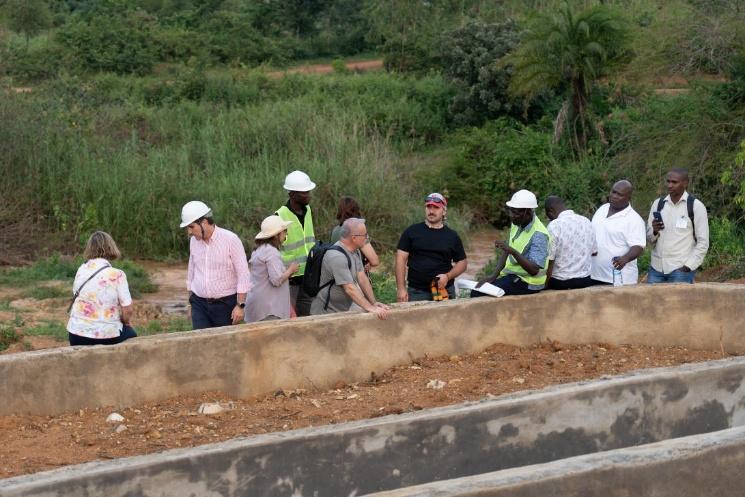
WP2 encompasses the physical establishment of four ECOHUB facilities across Ghana, Kenya, Tanzania, and Egypt. This includes site scoping, infrastructure setup, aquaculture cage/pond construction, and processing facility installation.
Production in ECOHUBs and Cages
Eco-farmed fish, sustainable feeds, and post-harvest technologies
WP3 focuses on the actual production activities within the established ECOHUBs — covering innovative fish production, sustainable feed formulation, post-harvest handling, and optimization of living lab aquaculture cage systems.
Spirulina Production & Processing
Selection, optimization, and innovative processing of spirulina species
WP4 addresses the optimization of spirulina production and innovative post-harvest processing. Spirulina species from lakes in different ECOHUB locations are characterized using molecular biology techniques for high protein, anti-pollution properties, and high phycocyanin content.
Novel variants are compared with the standard commercial control variety Spirulina platensis. The local species with the optimum properties will be farmed and processed for food and feed using AI sensors and IoT — coordinated by BMAEU (MAKU) Turkey.
Insect Species Production & Processing
Crickets, black soldier flies, and wild locust sustainability
WP5 covers the sustainable production and post-harvest processing of selected insect species. The work embraces three insect value chains with different sustainability profiles and market opportunities across African ECOHUB regions.
Up-cycling Waste Nutrients
Novel products from fish by-products, spirulina, and insects
WP6 addresses the circular economy principle — upcycling waste nutrients from fish by-products, spirulina processing residues, and insect frass into novel value-added products. CIIMAR plays a pivotal role in WP6.
Validation, Quality & Certification
Quality, safety, LCA, consumer acceptance, and certification schemes
WP7 validates the entire production chain — from nutritional quality to market certification. Led by CSIR-FRI, this WP ensures that all INNOECOFOOD products meet EU and international food safety standards and are commercially viable.
FMV (CIISA, Portugal) is mainly involved with ASC Certification, HACCP, and Food Control training across WP1, WP2, WP3, WP4, WP5, WP6, WP7, and WP8.
Training & Dissemination
Baseline surveys, training materials, knowledge management, and business models
WP8 ensures the project's knowledge reaches rural communities, policymakers, and the broader scientific community. FSPN Africa coordinates WP8, with B2E CoLAB producing educational content and videos. Training activities target 120 youth, 120 women, and 5,000+ community workers.